









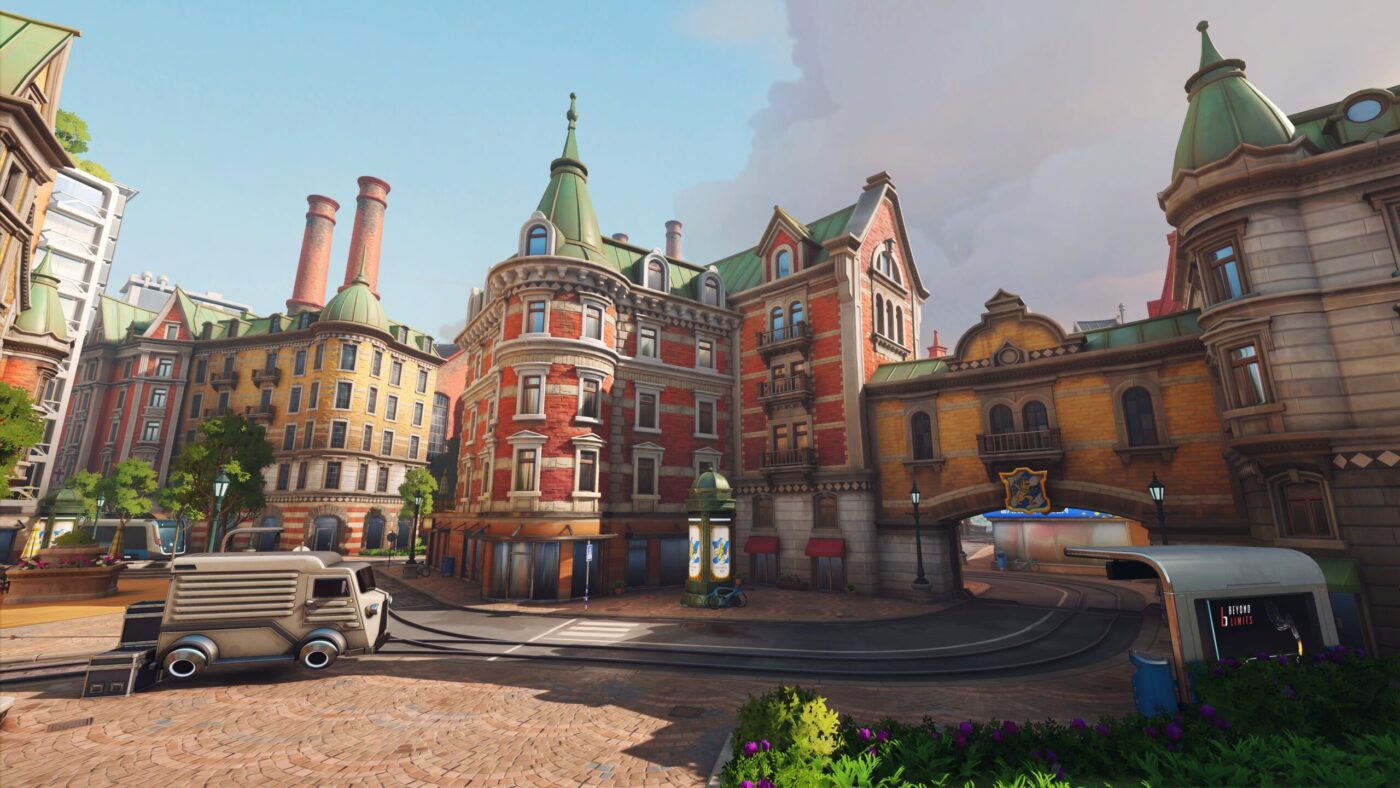
The Push game mode in Overwatch relies heavily on team coordination and maintaining control over a single objective—the robot. Historically, Push maps presented a generally linear path with side routes. The new map, Gothenburg, based in Sweden, breaks this convention by introducing a unique structural feature: two separate, parallel pathways for a significant portion of the map.
This design innovation immediately raises the strategic ceiling for the Push mode, forcing teams to adopt a complex, split-focus strategy that demands excellent communication.
The Layout: Dual Lanes of Conflict
Gothenburg is specifically engineered to test a team’s ability to divide resources and manage multiple fronts:
- Split Objectives: For key segments of the map, the main road is flanked by a second, equally viable indoor or elevated route. Both paths lead to the robot’s immediate vicinity, forcing both the attacking and defending teams to cover two distinct sightlines.
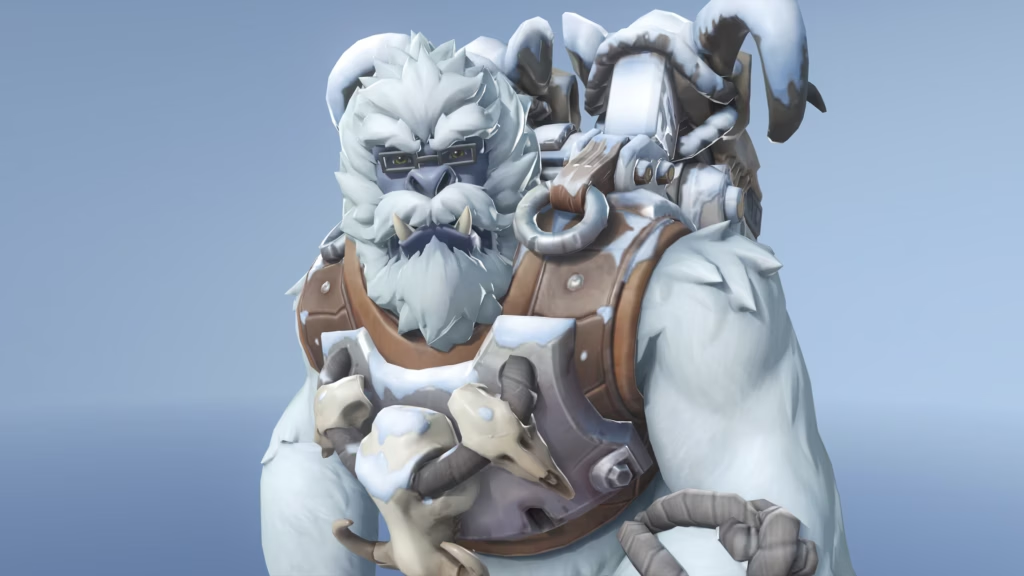
- Tank Choice Critical: The dual paths make the choice of Tank hero more critical than ever. Mobile Tanks (like Winston or Doomfist) excel at quickly switching between the two lanes to counter a split attack, while anchor Tanks (like Orisa or Reinhardt) struggle with the lack of single-point focus.
- Flanking Opportunities: The pathways are not symmetrical. One path is often shorter but more exposed, while the other is longer, winding, and features high ground, creating constant, high-stakes flanking opportunities for DPS heroes.
This unique geometry ensures that a simple, five-player frontal push is easily countered.
Strategic and Competitive Consequences
The impact of Gothenburg on the competitive meta is profound, requiring teams to master new concepts:
- Resource Division: Teams must now commit heroes to both lanes. A common strategy involves placing the main Tank and a high-healing Support on one path, and a mobile DPS and a utility Support on the flanking route, testing the team’s ability to win 3v2 or 2v3 engagements simultaneously.
- Communication Focus: Shotcalling has become immensely complex. Teams must clearly communicate where the enemy is applying pressure and which lane requires immediate rotational support from the DPS or Tank. Failure to communicate the enemy’s split instantly leads to a lost team fight.
- Support Hero Buff: Heroes who can heal across wide distances or switch their focus quickly (like Zenyatta, who can orb a player in the opposite lane, or Lifeweaver, who can pull a teammate across the divide) gain significant value on this map.
Gothenburg successfully revitalizes the Push mode by forcing complex, dual-lane tactical decisions, making it the most strategically demanding map in the current rotation.