













Aesthetic Design and Technical Layout
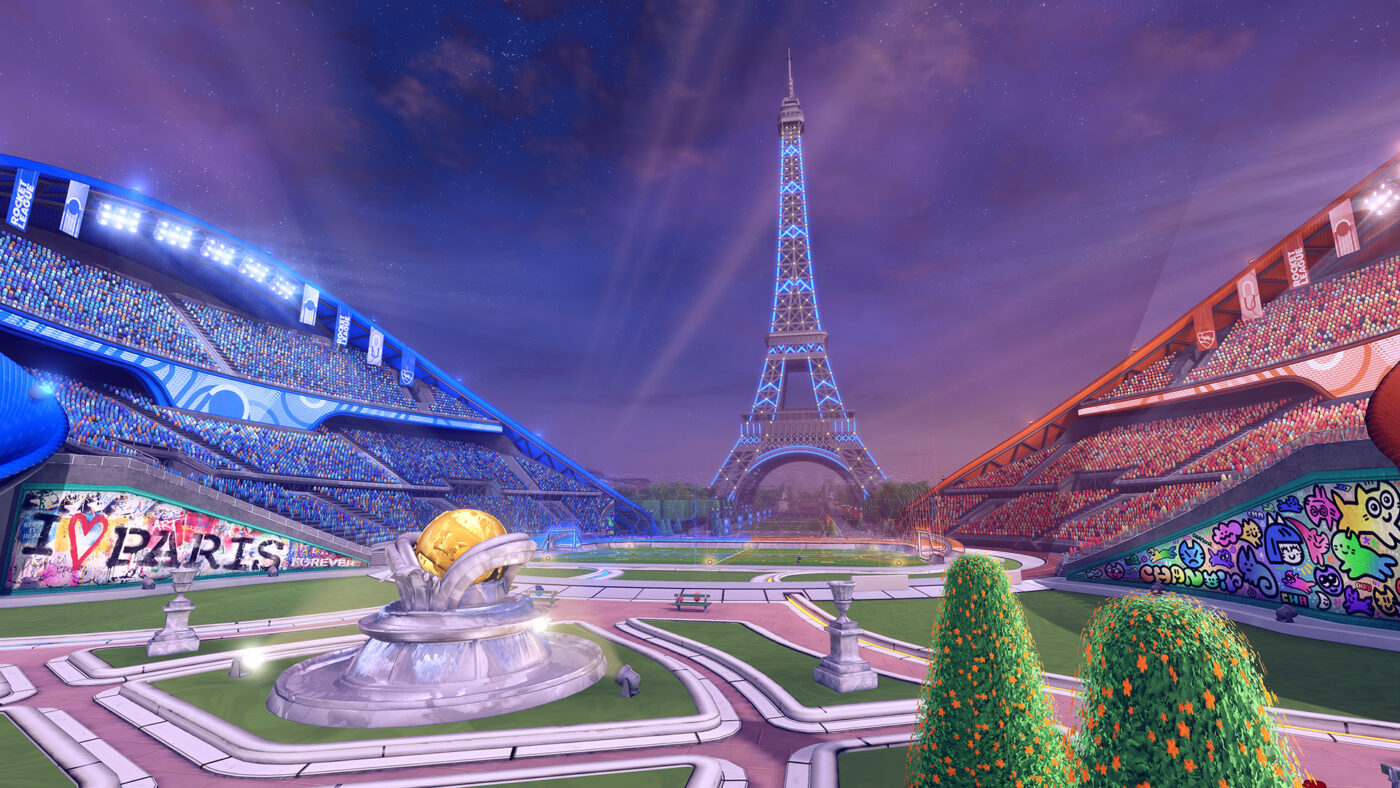
The launch of Season 21 introduces Parc de Paris, a new standard arena set against a French urban backdrop. The map features clear views of the Eiffel Tower and Parisian architecture outside the glass walls. Unlike experimental labs, this is a standard competitive map with traditional dimensions. The turf uses a deep green color palette that contrasts sharply with the orange and blue team neon.
From a technical standpoint, the arena focuses on high visibility. The developers opted for a “golden hour” lighting setup. This choice aims to provide a warm atmosphere without the blinding glare issues found in previous maps like Salty Shores or Neon Fields. The background assets are detailed but sit far enough away to avoid distracting players during high-speed aerial plays.
Performance and Visibility Standards
In Rocket League, a map is only as good as its frame rate and clarity. Early testing of Parc de Paris shows stable performance across PC and console platforms. The floor textures are clean, which makes it easy to track the ball’s shadow during flight. This is a critical factor for competitive players who rely on visual cues for timing their hits.
The boundary lines and boost pad placements are standard. There are no gimmicks or unique layouts here. The goal posts use a transparent material when the camera passes behind them, maintaining the industry standard for the game. For players on lower-end hardware, the external city assets do not seem to cause significant frame drops, suggesting well-optimized background rendering.
Community Feedback: Lighting and Distractions
The initial player reaction on Reddit and Discord is mostly positive. Many players have praised the map for not being “too bright.” In recent seasons, the community criticized several maps for having over-saturated colors that made it difficult to distinguish car nametags from the background. Parc de Paris seems to have fixed this issue.
Common points from the community:
- Visibility: Most players agree that the ball is easy to track against the skybox.
- Distractions: A small group of players mentioned that the moving cars in the background city can be a minor distraction. However, this is a niche complaint compared to the general praise for the lighting.
- Atmosphere: The “Parisian” vibe is well-received, and the lack of aggressive neon colors makes it a favorite for long sessions.
Overall, the map is a solid addition to the rotation. It provides a fresh look without sacrificing the competitive integrity of the game. It remains to be seen if it will become a staple in the RLCS (Rocket League Championship Series) broadcast rotation, but it currently meets all requirements for pro-level play.